
To pour forth benefits for
the common good is divine.
– Benjamin Franklin
Perry Scholars-Collegium Institute
Engaging Faith & Reason in the University and the Modern World
Partners for Sacred Places
Empowering community-serving religious organizations.
Common Ground for Common Good
Elevating Contemporary Church-State Debates
Program for Empirical Studies and Surveys
Examining Religion and spirituality empirically
Transnational Religious Organizations
Exploring global religion and transnational FBOs
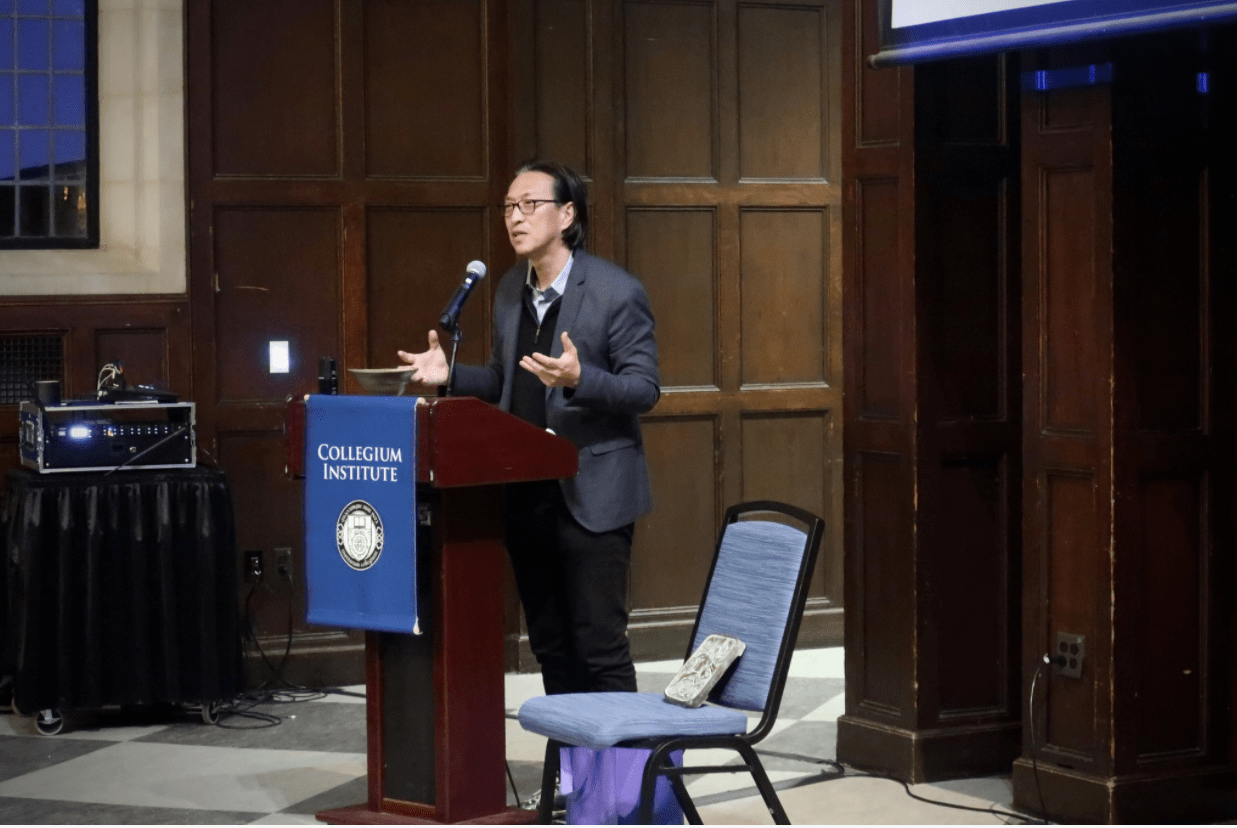
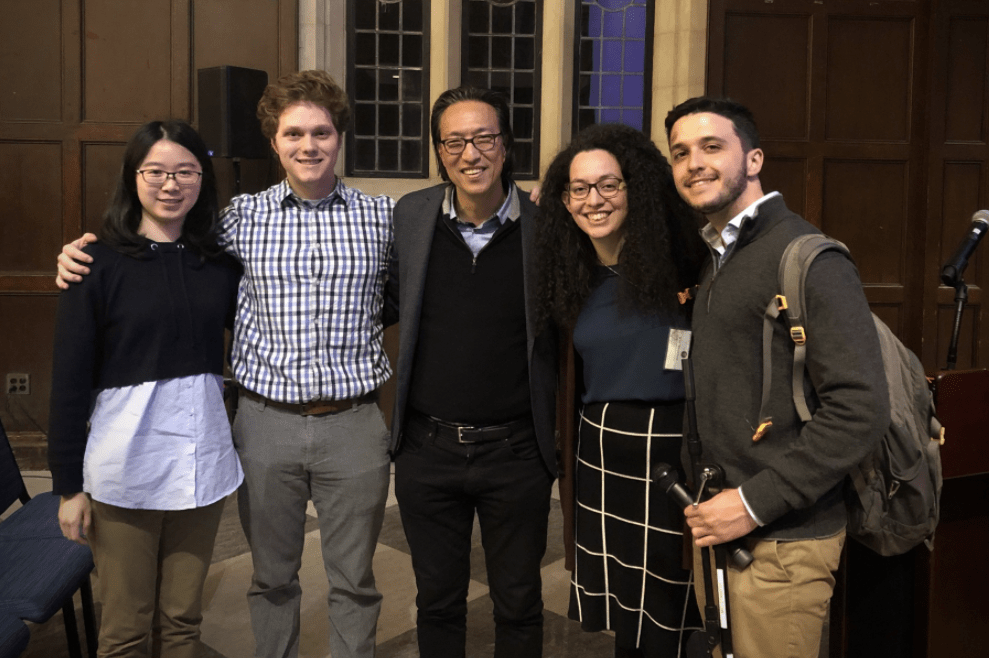
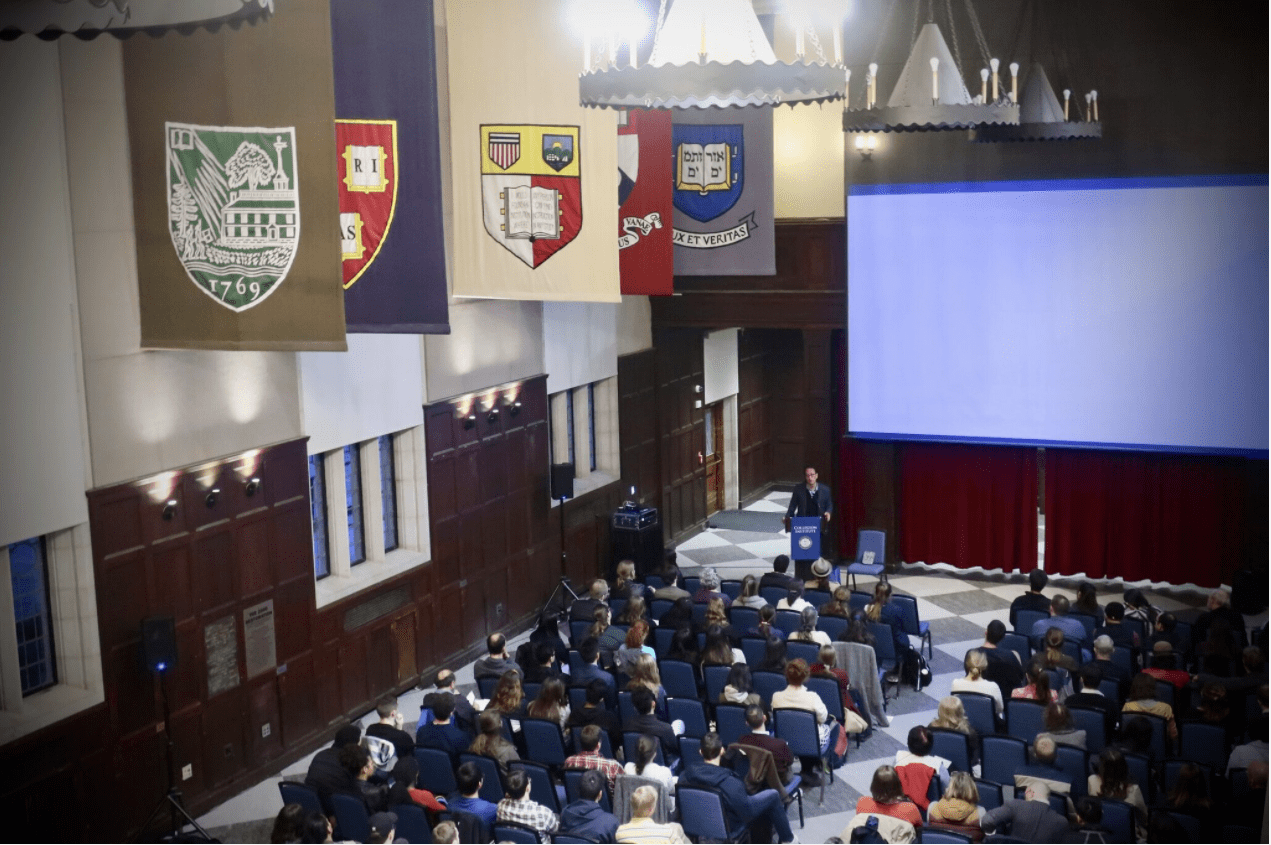
Featured Special Events 2025
Anscombe Unboxed on the Soul
September 16 | October 14 | November 18
 The Anscombe Reading Group is an opportunity for scholars, students, and interested readers to come together virtually three times during the Fall and three times during the Spring to discuss the philosophy of Elizabeth Anscombe, one of the seminal thinkers of the 20th century.
This Fall’s instantiation of the Anscombe Reading Group continues last year’s dive into the philosophical treasure trove that is the Collegium Institute Anscombe Archive, with a special focus on the subject of the soul. Across three sessions, we will read hand-picked selections from the Archive.
Faculty Colloquium: Beyond Excellence: On Contemplation and the Intellectual Life
November 14, 2025 | Cohen Hall, University of Pennsylvania
 This age-old question of the role of contemplation in the life of the mind has been made more relevant by our university-wide confrontation with AI: its awesome capabilities are leading us to imagine how we can “offload” tasks that once seemed core to the academic enterprise in the hopes of expanding our productivity exponentially… And if tasks like “brainstorming”, “outlining”, “writing”, and even “reading” now seem antiquated to many, what about the even more abstract exercise of contemplation, which by some historical accounts seemed to stand in for the academic project as a whole? Should we be re-articulating an account of education in which contemplation plays a significant role? Or is contemplation merely an epiphenomenon of other more concrete processes that now can be automated? This was an informal colloquium in which faculty across disciplines, schools, and other religious or ideological divisions build friendship through their engagement together of universal questions that are significant for our university community as a whole.
Staying Human in an Era of Artificial Intelligence: The Magi Project Fall Lecture
October 30, 2025 | Hall of Flags, Houston Hall, University of Pennsylvania

Our 21st century lives make it increasingly difficult to live as humans. From social media to Zoom meetings to fitness trackers, we live our lives in digital spaces, and in doing so, lose our grip on what is most real. Trends like these are not waning, but rather accelerating, spurred by AI and other new technologies. Most of these technologies are not intrinsically problematic and some can be used for good. Yet as our lives become increasingly digitized, the most human aspects of our lives atrophy. For the Catholic, moreover, since the sacraments meet us in our humanity, the patterns of 21st-century life threaten to undermine a sacramental outlook. In the Magi Project Fall Lecture, Professor Joseph M. Vukov, author of the recent book Staying Human in an Era of Artificial Intelligence, discussed his diagnosis of our current situation, and issued a call to action to resist problematic trends in it. Professor Vukov is an Associate Professor of Philosophy Department and the Associate Director of the Hank Center for the Catholic Intellectual Heritage at Loyola University Chicago. He serves on the AI Research Group for the Dicastery for Culture and Education and is the current President of Philosophers in Jesuit Education.
Class Matters: A Spirited Debate event on the Demise of Affirmative Action and the Demand to Build “Real Diversity” in Higher Education
October 8, 2025 | Princeton University

Director of the American Identity Project at the Progressive Policy Institute, Richard Kahlenberg provided groundbreaking testimony that played a pivotal role in persuading the Supreme Court to strike down racial affirmative action, dismaying – and outraging – his own progressive circle. Yet, his conviction that economic disadvantage provides a better, more fair way to achieve diversity is unwavering. In his new book, Class Matters: The Fight to Get Beyond Race Preferences, Reduce Inequality, and Build Real Diversity at America’s Colleges, Professor Kahlenberg made the definitive case for adopting a class-based approach to college admissions, giving more people a place at the table and more opportunity to “swim in the river of power.” He included an analysis of the preliminary admission results following the Supreme Court’s ruling, which indicate that colleges can achieve racial and economic diversity without explicit racial preferences. Professor Kahlenberg presented the case of Class Matters at this special event of Princeton University’s James Madison Program, co-presented with the new Spirited Debate Initiative of the University of Pennsylvania’s Program for Research on Religion and Urban Civil Society (PRRUCS). Kahlenberg’s opening remarks were followed by comments from Professor Marta Tienda (Princeton University) and Professor John McWhorter (Columbia University and New York Times). The conversation was moderated by Professor Robert P. George, Faculty Director of the James Madison Program.
ISME 2025: Intellectual Traditions in Dialogue and Conflict
July 10-12, 2024 | The Arch, University of Pennsylvania

In this first annual meeting of the International Society for MacIntyrean Enquiry (ISME) since the passing of Alasdair MacIntyre, this 3-day conference aimed to explore MacIntyre’s rich conceptualization of tradition and tradition-constituted enquiry, inviting discussions on the diverse interactions, conflicts, and potential reconciliations between various intellectual paradigms. Special attention was paid to how the contemporary moral philosophy and (and contemporary moral challenges) relate to classical virtue ethics, an ethical tradition reclaimed in the 20th century by MacIntyre and Elizabeth Anscombe, whose archive is held in Penn Special Collections through a partnership with PRRUCS.
Faculty Colloquium, “Rebuilding Trust in Higher Ed: Reawakening Socrates?”
April 25, 2025 | Penn Graduate School of Education

Last spring two Penn faculty members, Ezekiel Emanuel (Med) and Harun Küçük (Hist & Soc of Science), co-authored a New York Times Op-Ed, “Higher Education needs more Socrates and Plato.” Here is how it begins:
“The right attacks colleges and universities as leftist and woke. Progressives castigate them as perpetuating patriarchy and white privilege. The burdens of these culture war assaults are compounded by parents worried that the exorbitant costs of higher education aren’t worth it. No wonder Americans’ faith in universities is at a low. Only 36% of Americans have confidence in higher education…”
How in the world could Socrates be a plausible solution to this crisis in trust? And even if he somehow were, how might a remedy in that philosopher’s name correspond to the path of study outside the Humanities — to the natural sciences and the professional schools? Moreover, the university context in spring 2024 appears very different than the one in spring 2025: to what extent might last year’s suggestions for strengthening the university remain relevant?
This informal colloquium convened a diverse group of scholars to reflect on the current relevance and practicality of “reasserting the liberal arts idea” proposed by the NYT essay co-authors.
The Abnormal Becomes Normal: Facing Human Suffering in Clinical Medicine
April 9, 2025 | Amado Recital Hall, Irvine Auditorium, University of Pennsylvania
 Collegium Institute and PRRUCS presented a Medical Humanities Special Event with Naomi Rosenberg, MD, the Assistant Dean for Narrative Medicine and Health Humanities and an Emergency Medicine physician at the Lewis Katz School of Medicine at Temple University, who delivered a lecture and workshop on the importance of learning to understand and tell stories about the ways patients, families, and healthcare workers face human suffering in clinical practice.
Anscombe Unboxed on Bioethics
February 5 | March 5 | April 2

The Anscombe Reading Group is an opportunity for scholars, students, and interested readers to come together virtually three times during the Fall and three times during the Spring to discuss the philosophy of Elizabeth Anscombe, one of the seminal thinkers of the 20th century.
This Spring’s instantiation of the Anscombe Reading Group continues last year’s dive into the philosophical treasure trove that is the Collegium Institute Anscombe Archive, with a special focus on the subject of bioethics. Across three sessions, we will read hand-picked selections from the Archive.
All-American Socrates: The Intellectual Legacy and Teachings of Dr. Michael Sugrue
Monday, February 3, 2025 | Ave Maria University
 What does Socrates have to teach the American University today? To address this question, Penn PRRUCS Faculty Director John J. DiIulio, Jr., considered the life and legacy of Michael Sugrue, one year after his death in January 2024. Like Socrates, Sugrue was largely “unpublished”, but he devoted his career to teaching the philosophical wisdom and historical traditions of the last three millennia to generations of students at the University of Chicago, Columbia, Princeton, and Ave Maria University. He also was among the most popular and celebrated lecturers of The Teaching Company’s Great Courses series and became, according to the New York Times, an “internet phenomenon” for both his teaching videos and his podcasts. Could there be a future for “The Great Teacher” of “the great minds” in the contemporary research university and beyond?
The Sun Rises in the East: Missionaries in East Asia
Friday, January 31, 2025 | Penn Newman Center
 Professor Stephanie Wong (Villanova; PRRUCS Senior Affiliate) joined us for “The Sun Rises in the East: Evangelization in East Asia” in a seminar discussion on missionaries in East Asia. We examined the history of Christian evangelization in mainly China, including the cultural and state tensions and different missionary approaches from Catholics and Protestants. We investigated the immediate and long-term consequences of various evangelization approaches, especially focusing on translations (i.e. Matteo Ricci’s integration of Confucian thought in his translations of Western philosophical texts).
Is There a Catholic Case for a Second New Deal?
Wednesday, January 22, 2025 | University of Pennsylvania
 The University of Pennsylvania’s Program for Research on Religion and Urban Civil Society (PRRUCS) presented a “Spirited Debate” symposium on Wednesday, January 22, 2025, at the Penn Club of New York (30 W 44th St). The program began with a reception for all guests at 5:30 pm and a symposium from 6:30 – 8:30 pm.
Prof. John J. DiIulio, Faculty Director of PRRUCS, delivered the opening address: “South Philly Elegy: The Catholic Case for a Second New Deal.” The featured commentators included Sohrab Ahmari of UnHerd, Dr. E.J. Dionne of the Brookings Institution, and former US Senator Rick Santorum.
PRRUCS hosted this “Spirited Debate” symposium through its Perry-Collegium Initiative and it became the first part of a series on “Catholicism, Liberalism, and the Future of Democracy.” This event was co-sponsored by First Things and America Media.